
The Ultimate Nepali Festival Guide: Festivals of Nepal Throughout the Year
Nepali festivals are one of the best ways to experience the cultural diversity of Nepal. Whatever month you decide to visit, you are almost guaranteed to stumble onto a festival, whether it is a procession snaking through medieval alleys or a family feast bringing an entire community together.
Nepal’s festivals are much more than just a set of traditional holidays. They are deeply woven into the fabric of Nepalese society, creating opportunities for families to reunite, communities to come together, social hierarchies to be temporarily set aside, and centuries-old traditions to continue into the present day. From religious ceremonies and colourful processions to traditional foods, music and communal celebrations, these festivals reflect the country’s diverse cultural heritage and the values shared by its people. In this article, you will find a list of the most important Nepali festivals, along with cultural and historical context to help you understand their origins, significance and traditions, and appreciate the important role they continue to play in Nepalese life.
Understanding Nepal’s Festival Calendar
First of all, you may have noticed that many of these festivals seem to change their dates every year. This is because Nepal mostly follows the Vikram Sambat system of dating which is based on the lunar cycle. It is a good idea to check the most recent dates for the festivals you are interested in as they do vary from year to year. Dashain, for example, is a fifteen-day festival which usually falls at the end of September or the beginning of October.
It is also important to understand that Nepal is a multi-ethnic country and that different festivals fall according to the different calendars used by Nepal’s various ethnic groups. Newar people, for instance, have their own Nepal Sambat calendar, and the Tibetan Buddhist communities have their own lunar system which determines the dates of the Losar New Year celebration.
Spring Festivals
Holi: The Festival of Colors
Coming at the end of winter in March, Holi is one of the most eagerly anticipated festivals in Nepal. The whole country turns into a riot of color as people throw and paint each other with colored powder called abir. This festival is famous in Nepal as well as in neighboring India where it is celebrated with equal enthusiasm, although in Kathmandu valley it is usually held a day later than in the plains of Terai region.
The day before Holi is celebrated by lighting large bonfires across the country. The next day, the day of colors, everyone is encouraged to take to the streets and have fun throwing colored powder and water balloons at each other. What makes this festival particularly interesting is that it is both a religious holiday and a chance for people to purely enjoy themselves.
Ghode Jatra: The Horse Festival
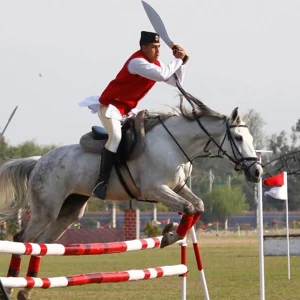
In March or April, Kathmandu is host to the fascinating Ghode Jatra festival. This is a military parade featuring the troops of the Nepal Army, as well as the horses which have been trained specifically for this event. The horse races and military displays at Tundikhel, the large parade ground at the heart of Kathmandu, are said to date back to the time when the army marched there to stomp on an evil demon named Gurumāpā.
Ghode Jatra is also a festival for the common people as many Newari communities hold special celebrations and prepare a unique dish said to bring good fortune.
Bisket Jatra: Bhaktapur’s Extraordinary New Year
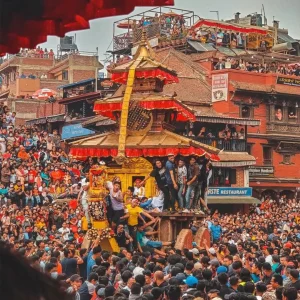
While the rest of the country quietly observes the New Year in mid-April, Bhaktapur city’s residents throw themselves into one of the most spectacular festivals in Nepal. Bisket Jatra sees rival groups pull a chariot decorated with images of Bhairav and Bhadrakāli around the city in a tug of war. This competition is so intense that the roofs of the houses along the route are often damaged and, in the past, people have even been killed.
The highlight of the festival is the raising and subsequent lowering of the lingo (a large pole) in the city’s main square. According to local legend, this ceremony is a fertility rite and an offering to the demon king which once terrorized the area. Bisket Jatra is the perfect opportunity to witness the incredible spirit of Nepal’s rural festivals.
Summer Festivals
Buddha Jayanti: The Birthday of the Enlightened One
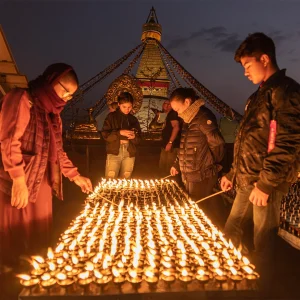
The full moon of April or May is a time of great religious significance in Nepal as it is the birthday of Buddha. It is widely believed that he was born, attained enlightenment and died on this day and so it is celebrated with great fanfare across the country.
The stupas of Swayambhunāth and Boudhanāth in Kathmandu are the main attractions during this holiday as crowds of people gather to walk clockwise around them, spinning the prayer wheels and offering butter lamps to the resident monks. This is also a good time to visit either of the two monastic towns surrounding the stupas as they are exceptionally busy and the temples are full of devotees.
Ropai Diwas: National Paddy Day
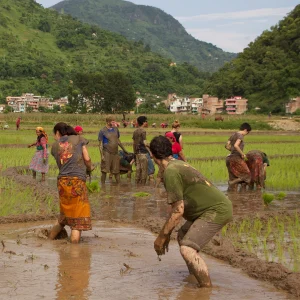
This is the time of the year when Nepal’s farmers start preparing their rice paddies for planting and it falls somewhere in June or July. Ropain Diwas is a festival which combines both religious and agricultural traditions. The farmers plant the rice seeds in the flooded fields while having fun throwing mud at each other, and the whole community gathers to enjoy folk music and dance performances.
It is interesting to note that Ropain Diwas is a great example of a holiday which is simultaneously a festival, a religious observance and a celebration of the harvest.
Gaura Parba: A Festival of Goddess Parvati
This festival, which is particularly popular in the far western region of Nepal, is dedicated to Goddess Pārvati. It is a festival of fertility and marital happiness which sees women fasting and participating in rituals. It is also a time for traditional music and dance performances which are very different from the dances you might see in the capital city.
Autumn Festivals
Teej: The Festival of Women
Held in August or September, Teej is a festival which has long been associated with women. It is a celebration of marital bliss and fertility which sees women dressing in red saris and elaborate jewelry, and dancing and singing folk songs in the streets. This is especially evident in the temple courtyards of Pashupatinath where women from across the country come to offer prayers to Lord Shiva.
While Teej has been a festival of women for centuries, it has recently acquired new meanings. The songs performed by women now often tell stories of gender discrimination and female empowerment. Married women fast during this festival to ensure the wellbeing of their husbands while unmarried women pray to be married and choose their life partners wisely.
Indra Jatra: The Festival of Indra
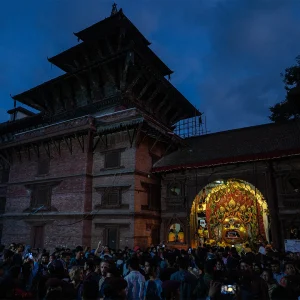
This grand festival which is held in mid-September marks the end of the rainy season. It is a spectacular week-long event which sees masked Lakhe dancers perform across the city and the Kumari, the living goddess of Kathmandu, take a procession through the city. According to legend, Indra, the king of the gods, once came to Kathmandu Valley to pick flowers for his mother but was tied up by the people of the valley who mistook him for a thief. The festival is held in his honor and to atone for this misdeed.
The highlight of the festival is when the giant mask of the Akash Bhairav is unveiled before the public. The mask is said to represent the god himself and during the festival, local people drink from a spout at the front of the mask. This is a great opportunity to see some of the most fascinating festivals in Nepal.
Dashain: The Great Festival
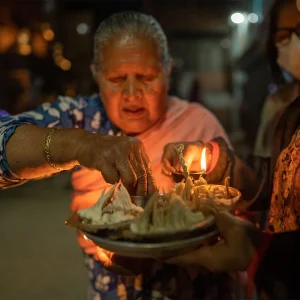
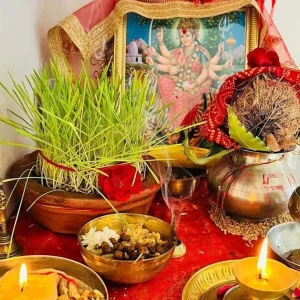
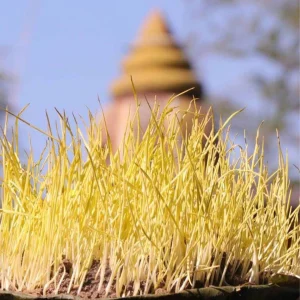
If you only have time to experience one Nepali festival, it should be Dashain. It is the most important holiday in Nepal which sees the whole country come to a standstill for fifteen days of revelry. Dashain is a festival of triumph and joy which commemorates the victory of the goddess Durga over the evil buffalo-headed demon. It is a deeply religious holiday which sees people planting jamara, a mixture of barley seeds and husks, in dark rooms. When the festival begins, these plants are uncovered to reveal yellow shoots.
The government offices, schools are closed and migrant workers return to their home towns and villages in great numbers. In Kathmandu, the airport can be particularly busy several weeks before the festival as people from around the country, and even the world, arrive in Nepal to experience the festival.
The highlight of Dashain is the day of tika and jamara when people of all ages line up outside the houses of elders to receive tika, a mixture of rice, yogurt and vermillion, and jamara. The elders pray for the wellbeing of the younger ones and give them money as blessings of prosperity. This is a wonderful opportunity to see the family-oriented values of Nepal’s culture as people from distant places come together to share in this important celebration.
Dashain is also a time for animal sacrifices which take place across the country at various shrines dedicated to Durga and Kali and later the meat is incorporated in the meals. The kite flying competitions are another popular activity during this festival and the sky above Kathmandu is often full of colorful kites. The most important activity, however, is the making of large swings (ping) in villages and neighborhoods which is a joyous occasion for children and adults alike.
Tihar: The Festival of Lights
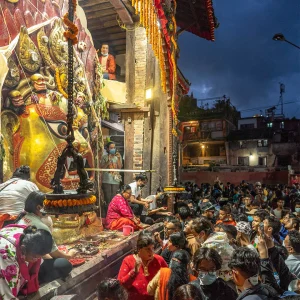
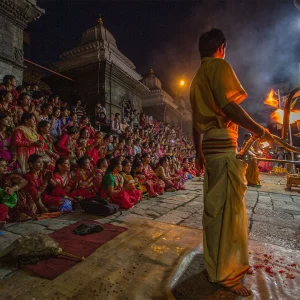
The festival of lights, Tihar, is celebrated two weeks after Dashain and is also known as the festival of crows, dogs, cows and brothers. Tihar is a five-day festival which starts with the worship of crows (Kaag Tihar) who are believed to be the messengers of Yama, the god of death. They are fed and given tika as an offering. On the next day, the dogs (Kukur Tihar) are similarly honored as they are believed to be the gatekeepers of heaven. The cows are worshipped on the following day (Gai Tihar) as cows are regarded as sacred and associated with Laxmi, the goddess of wealth and prosperity.
This is also the day when people light oil-lamps to welcome prosperity and happiness. The Newari community also celebrates Mha Puja on this day which is a fascinating festival of self-worship as they believe that the divine resides within oneself too and one must first honor themselves before others.
The most important day of Tihar is Bhai Tika when sisters give tika and gifts to their brothers as an offering to ward off misfortune and death. In return, the brothers give gifts and assure their sisters of their protection. This day is so important that people travel great distances to be with their siblings or at least call them to share in this special occasion.
The whole country is aglow with lights during this festival and the evenings are particularly special as every home and business seems to have lights and candles on display. This creates a truly magical view, especially in Kathmandu valley, and is in many ways more spectacular than similar festivals in other countries. The evenings are also marked by children and adults going from house to house singing Deusi and Bhailo, traditional songs known for their distinctive, repetitive rhythms and lively dancing, which is similar to caroling in Western countries but involves more dancing and less singing.
Winter Festivals
Chhath Parba: The Sun God’s Festival
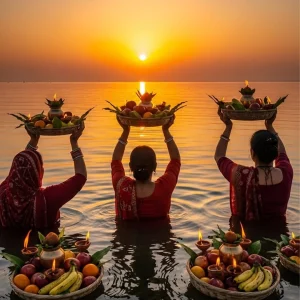
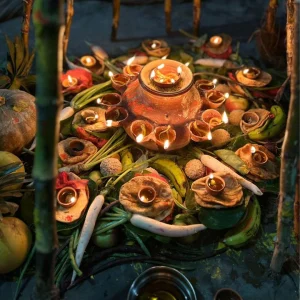
Chhath Parba is a popular festival among the Madhesi ethnic group which is celebrated in the sun-drenched plains of Terai at the end of October or the beginning of November. This is a festival of gratitude to the Sun God for his blessings and it involves fasting and special prayers.
This is one of the most physically demanding festivals in Nepal as the faithful have to stand in rivers and ponds at sunrise and sunset and also fast for several days while offering prayers. It is fascinating to see the devotion and discipline of the people who participate in this festival.
Yomari Punhi: The Newari Festival
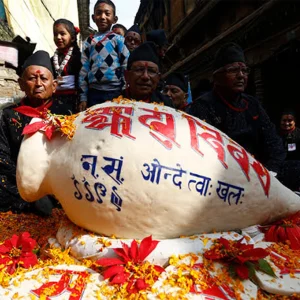
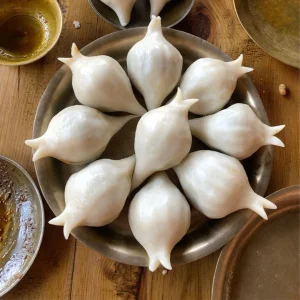
This harvest festival is celebrated by the Newar communities of the Kathmandu Valley in December. At its heart is yomari, a special steamed sweet made from rice flour and filled with molasses, sesame seeds or khuwa (thickened milk). Traditionally shaped like a fig, the yomari is associated with prosperity and abundance. During the festival, the historic streets of Kathmandu come alive as people in traditional dress prepare, share and sell yomari.
Maghe Sankranti: The Winter Solstice
This winter festival is celebrated in January and marks the sun’s northward journey, bringing longer and warmer days. It is particularly important to the Tharu people of the Terai, who celebrate it as Maghi, marking the beginning of a new year and a time for community gatherings and celebrations.
Maghe Sankranti is also an important festival for the Magar community, who celebrate it with their own cultural traditions, family gatherings and feasting. Across communities, it is associated with health, prosperity and the renewal that comes with the changing season.
Traditional foods include til laddu (sesame sweets), sweet potatoes, yams and ghee, while many people also bathe in rivers and ponds as part of the festival’s purification rituals.
For travellers, Maghe Sankranti offers an opportunity to experience the diverse traditions of Nepal’s communities; from Tharu celebrations in the Terai to Magar traditions in the hills.
Losar: Tibetan New Year
Losar is the Tibetan New Year which is celebrated by the Sherpa and Tamang communities of Nepal. It is a fascinating festival which combines many unique traditions. The most important activity is the Cham dance performed by the monks of the monasteries. The festival is marked by feasts and family gatherings and the special guthuk soup is a must-try for visitors.
Boudhanath and the Everest region are the places to be for this festival as the monasteries there organize special prayer meetings and the local community hosts numerous festivities.
Maha Shivaratri: The Great Night of Shiva
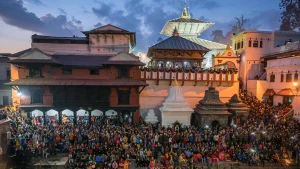
This important festival falls in February or March and it is one of the most popular festivals in Nepal. It is a night-long celebration which sees thousands of Sādhus (Hindu ascetics) and other devotees gather at Pashupatināth Temple at the foothills of the mountains in Kathmandu. This temple is one of the most important Hindu pilgrimage sites in the country and it becomes completely crowded during this festival.
It is a deeply spiritual experience to witness the rituals and dances of the sadhus who have traveled across the country for this festival. The atmosphere is one of intense devotion as the crowds of people fill the temple compound and the hills around it with the sound of their chanting. The temple is filled with the smell of incense, cannabis and the sight of the ash-covered bodies of the sadhus is quite an unforgettable one.
More Than a Trekking Holiday
The festivals highlighted above are just a glimpse of the many celebrations that take place across Nepal throughout the year. From grand public celebrations to intimate community traditions, each festival reflects the country’s rich cultural and religious diversity.
More than celebrations, festivals are a way for communities to preserve traditions, pass them from one generation to the next, and bring families and neighbours together. For travellers, experiencing a festival offers a deeper look into Nepal: its beliefs, customs, food, music and the values that shape everyday life.
If anyone wants to truly understand Nepal beyond its mountains and monuments, its festivals are a great place to start.
Also read: Best Time to Visit Nepal: Seasonal Adventures in Nepal
Some pictures are from the internet.
Related Blogs