
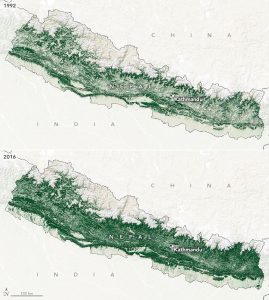
In 1979, the World Bank warned that Nepal’s hill forests could disappear within just ten years if deforestation continued unchecked. At the time, rapid tree cutting for firewood, expanding farmland, and weak forest management painted a grim picture for the country’s natural landscape. Fast forward a few decades, and Nepal has achieved one of the most remarkable environmental turnarounds in the world: its forest cover has increased from roughly 26% in the early 1990s to about 46% as of 2024, surpassing the national target of 45% set for 2030. This incredible forest recovery story is now celebrated globally as a model of community-led conservation, natural regeneration, and sustainable management.
The State of Nepal’s Forests: A Historical Overview
Industrialization and Forest Demand
- In 1955-1972, Nepal began modern industrialization with small- and medium-scale factories such as sugar mills, brick kilns, and textile plants.
- These industries required wood for fuel and construction, while infrastructure projects like roads and bridges led to large-scale tree clearing.
Population Growth and Urbanization
- Rapid population growth in the 1960s and 1970s increased demand for settlements and resources.
- Growing towns and industrial hubs required more land and building materials, putting additional pressure on nearby forests.
Agriculture and Industrial Link
- Expansion of farmland to feed the increasing population led to clearing of forested areas.
- Industrial growth indirectly fueled deforestation by increasing the need for raw materials, food, and labor in urbanizing areas.
Energy Infrastructure and Household Dependence
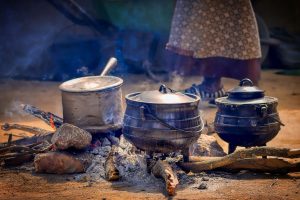
- Households relied heavily on firewood for cooking, heating, and other daily needs.
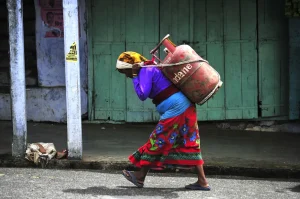
- Modern energy sources like LPG and electricity were scarce, particularly in rural areas, making forests the primary source of energy.
Weak Forest Governance
- Centralized forest management struggled to control illegal logging and overharvesting.
- Lack of local community involvement in forest protection made it difficult to prevent forest degradation.
These factors combined to reduce Nepal’s forest cover from approximately 60 percent in the 1950s to around 26–30 percent in the 1990s, setting the stage for later recovery through community-led forestry, alternative energy adoption, and natural regeneration.

Community Forest User Groups (CFUGs): The Game Changer
The introduction of Community Forest User Groups (CFUGs) in the late 1970s and early 1990s revolutionized forest management.
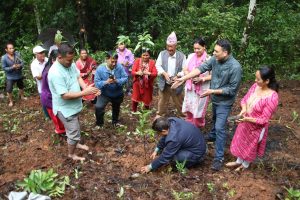
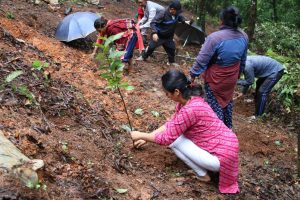
What are CFUGs?
CFUGs are local community organizations that legally manage forest land, which are mostly women-led. Rather than the government controlling forests, the people living near the forest are given rights and responsibilities.
How CFUGs Work
- Membership:
Households near the forest become members and share responsibility for protection and management.
- Rules & Governance:
CFUGs create their own forest rules, including how many trees can be cut, rotational harvesting systems, and grazing limits.
- Income & Benefits:
Timber and non-timber forest products can be sold. Profits are used for local development projects like schools, health centers, and irrigation systems.
- Monitoring:
Members patrol forests, prevent illegal logging, and encourage natural regeneration.
The result? Forests are protected because the community directly benefits from them. CFUGs create a sense of ownership and stewardship, which has been crucial to Nepal’s forest recovery.
The Role of Energy Transition
One of the often-overlooked reasons for Nepal’s forest recovery is reduced dependence on firewood.
- Shift to alternative energy: Many households now use LPG gas, biogas, and electricity for cooking.
- Improved efficiency: Modern stoves and energy-saving techniques reduce firewood consumption.
- Impact: Less fuelwood demand means less pressure on forests, allowing natural regeneration.
Combined with CFUGs, this energy transition has given forests a chance to heal naturally.
Natural Regeneration: Letting Forests Heal
Interestingly, much of Nepal’s forest recovery did not come from large-scale planting.
- Abandoned farmland regrew: Migration to cities and abroad left agricultural land unused, which naturally reverted to forest.
- Controlled grazing: CFUG rules reduced livestock pressure on young trees.
- Seed dispersal and biodiversity: Native tree species regenerated, improving overall forest quality.
Today, Nepal’s forest cover is about 46%, up from 26% (read NASA article here) in the early 1990s. That’s an incredible turnaround in just a few decades.
Read: Nepal’s Journey in Wildlife Conservation: Tigers, Red Pandas, Vultures and more
Challenges Ahead
Despite this success, Nepal’s forests face ongoing challenges:
Illegal logging: Especially in commercial and lowland forests.
Forest fires: Increasingly common due to climate change.
Economic barriers: Some community forests have unsold timber due to taxes and market access issues.
Forest quality: While forest area has increased, some forests are younger and less biodiverse than old-growth forests.
Addressing these challenges requires continued policy innovation, community participation, and climate-resilient forest management.
Lessons From Nepal: A Model for the World
Nepal’s forest recovery offers valuable lessons for other countries:
- Empower local communities: When people benefit directly, they protect natural resources.
- Integrate energy solutions: Reducing dependency on wood fuels can dramatically reduce deforestation.
- Encourage natural regeneration: Sometimes, forests can heal on their own if human pressures are reduced.
- Monitor and adapt: Regional variations require tailored strategies to ensure forests thrive.
Global environmentalists now cite Nepal as a shining example of how policy, community, and ecology can align for a green future.

Conclusion: Nepal’s Green Comeback
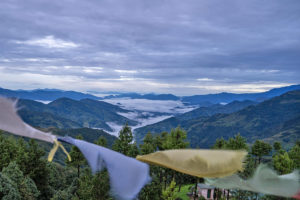
Nepal’s story is inspiring: a country that was once at risk of losing its forests has now reversed the trend, thanks to the Forest Act of 1993, CFUGs, energy transitions, and natural regeneration.
For travelers, trekkers and nature lovers exploring the Himalayas, it is a reminder that sustainable management and community involvement can protect our planet.
Nepal proves that forest recovery is not just about trees; it is about people, policies and partnerships.🌳
Sources:
Forest Reference Emission Level Report (UNFCCC / Nepal)
MDPI Research on Community Forestry
RECOFTC Analysis of Nepal’s Forest History and CFUGs
FAO Forest Resources Assessment (FRA 2000)
NASA
Recent Comments