
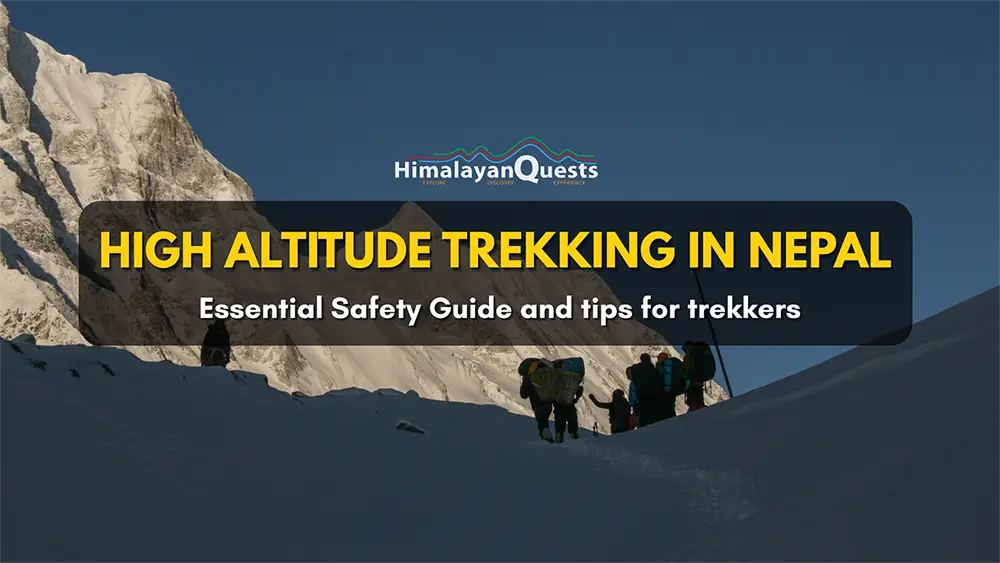
Trekking in the Himalayas is an unforgettable experience but the beauty of high-altitude landscapes also comes with risks. The key to a successful journey lies not just in physical fitness or mental readiness but also in understanding altitude challenges and following essential safety precautions.
Understanding High Altitude Risks
At elevations above 2,500 metres, the air becomes thinner, reducing oxygen intake. If your body doesn’t adjust gradually, you may experience Altitude Mountain Sickness (AMS). Early symptoms of AMS, which is the most common thing to happen in the Himalayas, include headache, nausea, dizziness and sleep difficulties. In severe cases, trekkers risk High Altitude Pulmonary Edema (HAPE), where fluid builds in the lungs making the trekkers feel shortness of breath, chest tightness, persistent cough, cyanosis (bluish discoloration of lips and fingertips), rapid heart rate, gurgling or rattling sounds in chest, or High Altitude Cerebral Edema (HACE), where fluid builds in the brain causing the brain to swell causing severe and persistent headache, loss of coordination and balance (Ataxia), confusion or disorientation, hallucinations, blurred or double vision and seizure or coma in extreme cases.
Both are severe cases of worsened AMS and life-threatening without immediate descent and medical care.

Safety and Precautions in the Himalayas
1. Gradual Ascent & Acclimatisation
- Plan your trek so you do not climb more than 300-500 metres in a day once you cross 3000-3500 metres.
- Include rest days at higher elevations, allowing your body to adapt.
- Follow the “climb high, sleep low” principle; hike to higher points during the day but return to lower altitudes to sleep.
- Never rush your itinerary; pushing too quickly is the most common cause of altitude sickness.
2. Hydration & Nutrition
- Drink 3 – 4 litres of water daily; dehydration makes acclimatisation harder.
- Avoid alcohol and minimise caffeine, as both contribute to dehydration.
- Carry electrolyte powders or oral rehydration salts to maintain mineral balance.
- Eat high-carbohydrate meals such as rice, potatoes or pasta, which give your body the energy it needs in thin air. (as the saying goes: Dal-Bhat power, 24 hour)


3. Recognise Symptoms Early
- Pay attention to any headache, nausea, loss of appetite or unusual fatigue. These are the body’s warning signals.
- If symptoms worsen like persistent vomiting, difficulty walking straight or shortness of breath at rest, do not ascend further.
- The best cure for AMS is immediate descent to a lower altitude. Medication or oxygen can support recovery but they do not replace descent.
4. Travel with Trained Guides
- A qualified guide understands local terrain, weather changes and medical protocols.
- Guides carry pulse oximeters to monitor oxygen levels and check your condition daily in high altitudes.
- In emergencies, a trained guide knows the fastest routes for evacuation and can coordinate with rescue teams.
- All high altitude trekking guides are first-aid trained. At Himalayan Quests, all of our guides are Wilderness First Aid trained.


5. Emergency Preparedness
- Carry a basic first-aid kit including altitude medication (like Diamox if prescribed by your doctor), pain relievers and bandages.
- Ensure that your trek package includes emergency evacuation support by helicopter, especially for remote regions.
- Always have travel insurance that covers high-altitude trekking.
6. Proper Gear & Clothing
- Pack in layers: a moisture-wicking base, an insulating mid-layer and a waterproof outer jacket.
- Always have thermal gloves, wool socks and a warm hat, since most body heat is lost through hands, feet and head.
- Wear UV-protection sunglasses; snow blindness is common at high altitude.
- Apply sunscreen SPF 50+; the sun is stronger at altitude.
- Invest in well-fitted trekking boots with ankle support to prevent injuries on rocky trails.
Why Safety Should Be Your Top Priority
Trekking in the Himalayas is a life-changing experience for sure, but every great adventure comes with challenges. By listening to your body, respecting acclimatisation and trekking with professionals ensures that your journey remains memorable for the right reasons.
At Himalayan Quests, safety is part of every itinerary. Our guides are trained in wilderness first aid, altitude response and emergency evacuation if needed. When you trek with us, you’re not just exploring the Himalayas; you’re doing it responsibly, with your wellbeing as the top priority.


Ready To Begin Some Adventure?
Get in touch with us today; email us, send a DM or connect through our social media channels. Follow along for daily travel inspiration, safety tips, reviews and behind-the-scenes moments from the trails. If you’re ready to book your next Himalayan adventure, our team is just a message away.
Recent Comments